Episode 310

full
Published on:

17th Sep 2026

You Can't Make Someone Learn: Moving from Control to Influence

What happens when you care deeply about helping someone learn, but they simply aren’t engaging?

In this episode of Life = Choices, Choices = Life, Kim Olver explores one of the most frustrating truths in education, parenting, coaching, supervision, and relationships:

You can teach someone, but you can’t make them learn.

Kim explains the difference between teaching and learning, why trying harder to control another person can actually move us away from influence, and how Choice Theory® offers a more effective way to think about motivation and responsibility.

Rather than asking, “How do I make them learn?” Kim encourages us to ask a different question: What conditions can I help create that will make learning more likely?

That shift opens the door to looking at the relationship, relevance, respect, meaningful choice, fear of failure, competing needs, and the many factors that affect whether someone is ready to engage.

Kim also explores why compliance is not the same as learning. A person may complete an assignment, follow instructions, or produce the behavior we want because of pressure, rewards, or consequences, but that doesn’t necessarily mean real learning has taken place. Real learning requires participation.

It happens when the learner thinks about the information, questions it, connects it to something they already know, tests it, applies it, and makes it their own.

The same principle applies outside the classroom. You may know exactly what would help your adult child. You may have advice that could save a friend months of heartache. You may explain something to your partner and wonder why they don’t see what seems obvious to you.

But caring doesn't give us control.

Sometimes the most respectful thing we can do is offer what we know, create the best conditions we can, and allow the other person the agency to decide what to do with it.

In this episode, Kim discusses:

  • The difference between teaching and learning
  • Why you cannot control another person’s behavior
  • How influence differs from coercion
  • What conditions can support learning
  • The role of relationship, relevance, respect, and meaningful choice
  • Why compliance is not the same as learning
  • Learner agency and personal responsibility
  • How Choice Theory helps clarify what belongs to the teacher and what belongs to the learner
  • Why this same principle applies to parenting, coaching, supervision, and relationships
  • How Mental Freedom approaches information as invitational rather than prescriptive

Questions to Consider

  • Am I doing what I reasonably can to create conditions in which learning can occur?
  • Am I taking responsibility for something that ultimately belongs to the learner?
  • Am I trying to influence, or am I trying to control?
  • Does the person I’m trying to teach understand why the information matters?
  • Am I allowing enough room for the learner to make the information their own?

Key Takeaway

You can teach. You can encourage. You can influence. You can invite. But learning? That belongs to them.
Show artwork for Life = Choices; Choices = Life

About the Podcast

Life = Choices; Choices = Life
Practical Conversations About Leadership, Relationships, and Personal Responsibility Through Mental Freedom
Hosted by author, speaker, and coach Kim Olver, Life = Choices; Choices = Life explores how personal responsibility, emotional awareness, and intentional decision-making shape our relationships, leadership, and everyday lives.

Drawing on the principles of Choice Theory® and the framework of Mental Freedom®, Kim has thoughtful conversations with experts, educators, coaches, and leaders about how people can respond to life with greater clarity, connection, and purpose.

Kim Olver is the author of several books on relationships and personal growth, including Mental Freedom®: You Hold the Key, Choosing Me Now, and Secrets of Happy Couples.

Each episode offers practical insights on topics such as:

• Relationships and couples
• Parenting and family dynamics
• Leadership and workplace culture
• coaching and personal development
• Education and human behavior
• Emotional resilience and mental health
• Diversity, equity, inclusion, and belonging

Through interviews and occasional solo reflections, Kim helps listeners understand how our thinking shapes our actions—and how choosing responsibility over blame can lead to healthier relationships, stronger leadership, and a greater sense of freedom.

If you're interested in personal growth, meaningful conversations, and learning how to respond to life with intention rather than reaction, this podcast offers ideas, tools, and perspectives you can apply right away.

Because ultimately,

Life equals choices… and choices equal life.

About your host

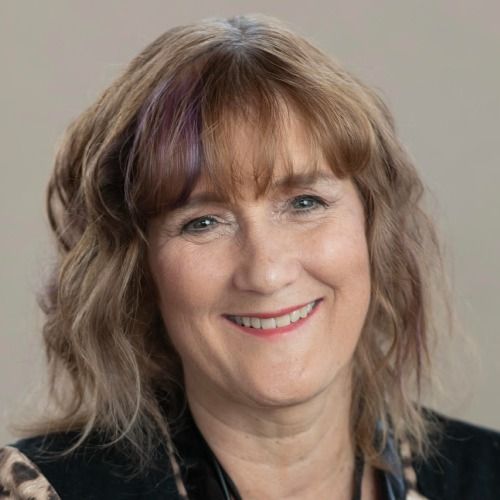
Profile picture for Kim Olver

Kim Olver

Kim Olver's mission is to help people make better choices for a better life. She is a licensed clinical professional counselor, a nationally certified counselor and a board certified coach. She is a world renowned expert in Choice Theory™ , a highly sought after international speaker and an award-winning author. Her books include: Leveraging Diversity at Work with Sylvester Baugh (2006), Secrets of Happy Couples (2010), Choosing Me Now (2019) and A Choice Theory Guide to Relationships (2019). Kim is currently working on the forthcoming books, The Definitive Guide to Coaching and Radical Responsibility and Appreciation. Kim is the author of The Relationship Center blog; creator of Empowerment Parenting, a 25-hour parenting curriculum for court-mandated parents; and owner of Academy of Choice, a BCC (Board Certified Coach) Coaching Program. Kim worked five years as a counselor for schizophrenics in a community-based residential program, 17 years holding various positions with a specialized foster care agency, was Executive Director of Glasser Institute for Choice Theory for nine years and the Executive Director for William Glasser International for eight; and began her own company, Coaching for Excellence, in 2005. She is a model of what she teaches about taking responsibility for the things she can influence and control and finding appreciation for those things she can't. Kim believes radical responsibility and appreciation are the keys to a happy, peaceful, satisfying life.